- +91 95890 15575
- office@lumierefenestration.com

Residential Applications
Windows for the Spaces You Live In
Each room in a home carries a different performance demand — noise, ventilation, safety, privacy.
The right uPVC window type for a bedroom is rarely the right choice for a balcony.
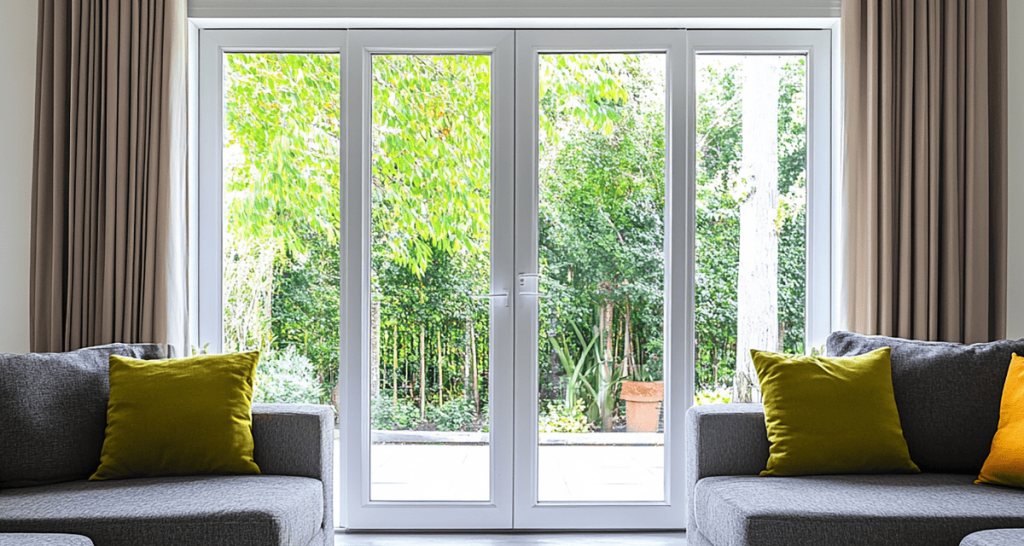
Living Room & Hall
The living room typically carries the widest opening in a home and serves as the primary connection between interior space and the outside. It demands large glass spans, smooth daily operation, and long-term structural stability — without visual clutter from heavy frames. For openings that connect to a garden, verandah, or open terrace, a system that can fully retract is preferred over one that partially obstructs. For bay-facing elevations where the opening is deep or angled, a bay window brings added spatial character.
Recommended: Sliding · Slide & Fold · Bay Combination
Bedroom
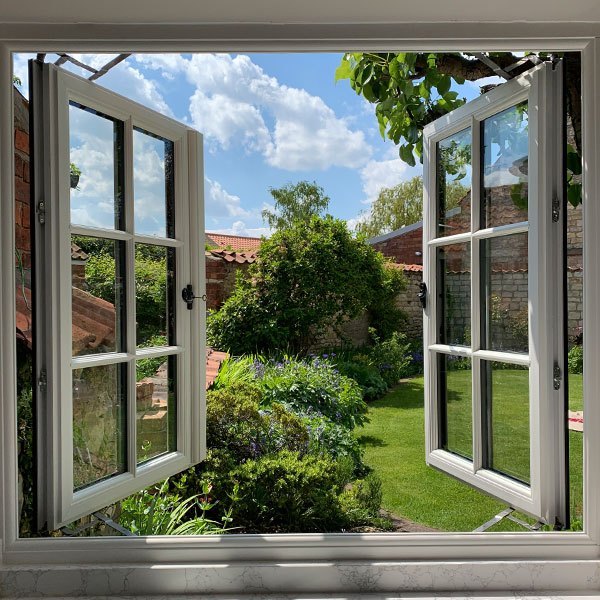
Bedrooms require a window system that can be operated quietly, seals tightly against street noise and dust, and allows controlled ventilation during sleep hours. A casement window — side-hinged and operable by a single handle — offers tight weather sealing and precise airflow control that sliding systems cannot match. For bedrooms in high-rise apartments or urban settings where noise and wind pressure are higher, a tilt & turn system allows gentle top-tilt ventilation while remaining fully locked. This combination of operation and sealing makes it the preferred specification for bedrooms in performance-conscious projects.
Recommended: Casement · Tilt & Turn
Kitchen
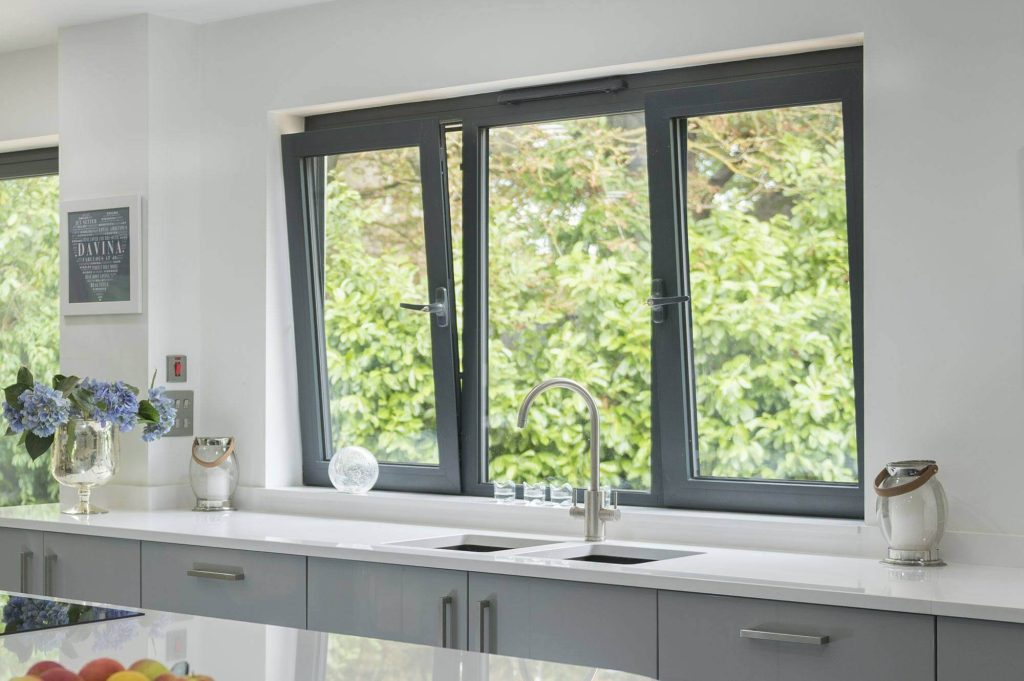
Kitchen windows deal with concentrated moisture, steam, and airborne grease — conditions that cause wood to swell and aluminium to corrode over time. uPVC’s non-porous, chemically inert surface handles these without degradation. The opening style matters here: a casement or awning window that can be positioned partially open while cooking provides steady cross-ventilation without the rain entry risk that a fully open sliding window presents. For kitchens above ground level, awning windows are particularly effective — they open outward from the bottom, allowing ventilation even during light rain.
Recommended: Casement · Awning · Combination
Bathroom
Bathroom windows serve two purposes: ventilation and privacy. They must allow air movement without exposure. A casement window positioned higher on the wall handles both. In compact bathrooms, a smaller fixed panel combined with a ventilating casement achieves both functions within a minimal frame footprint. The window must resist prolonged moisture exposure — a condition that eliminates wood entirely and makes the low-maintenance, corrosion-free nature of uPVC the default specification.
Recommended: Casement · Awning · Combination (Fixed + Vent)

Balcony & Terrace
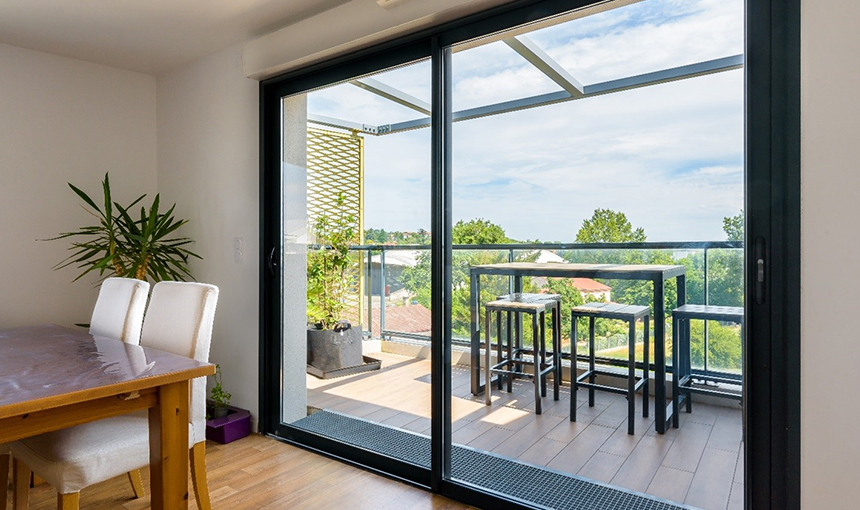
Balconies — particularly in Kerala’s coastal and high-humidity zones — experience sustained exposure to salt air, wind-driven rain, and UV degradation. A sliding uPVC window is the standard application here: it handles wide spans, allows full ventilation, and does not require clearance space for swing. For balconies that transition to indoor living — where the architectural intent is to dissolve the boundary between interior and exterior — a slide & fold system is the more resolved specification. It retracts completely, removing the visual and physical barrier entirely.
Recommended: Sliding · Slide & Fold
Staircase & Corridor
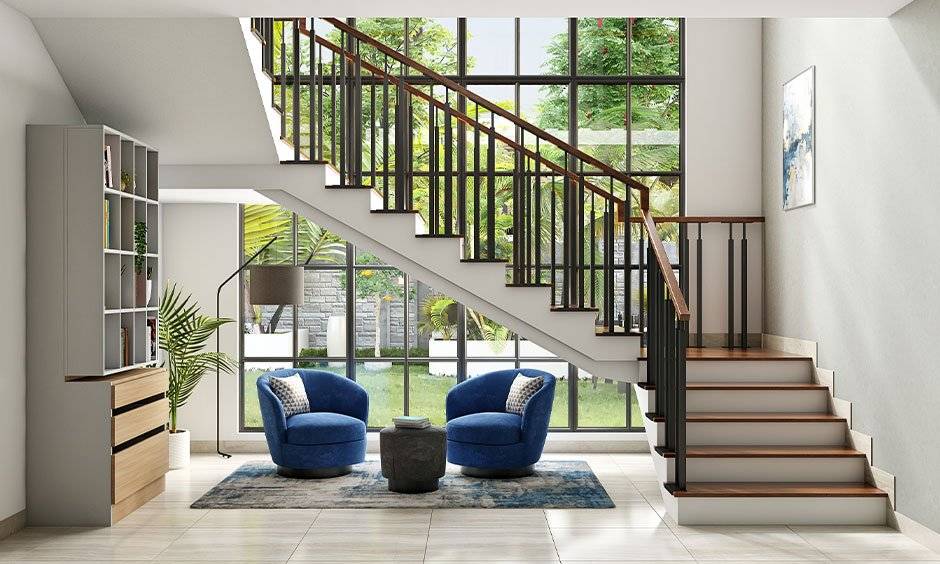
Staircases and internal corridors are frequently under-specified in window selection, yet they are the primary vertical shafts through which natural light reaches deep into a building. A fixed uPVC window positioned high on a staircase wall or landing brings in consistent daylight without ventilation risk. In wider staircase openings, a combination of fixed panels with a small casement vent allows passive stack ventilation — drawing warm air upward through the building without mechanical assistance.
Recommended: Fixed · Combination (Fixed + Casement)
Study & Home Office
A study requires a window that can be adjusted with precision — wide open in the morning, gently vented during calls, and fully sealed during deep work. Tilt & turn windows are purpose-made for this kind of granular control. The tilt position introduces a steady supply of fresh air without cold drafts or wind noise; the full-turn position opens the window completely for cleaning or maximum airflow. The sealed position is genuinely airtight, isolating the room from traffic noise and ambient sound in ways that casement hardware cannot always guarantee.
Recommended: Tilt & Turn · Casement

Dining Area
Where a dining room opens toward a covered outdoor area, garden, or deck — a slide & fold system allows the space to extend fully into the outdoors during meals and social gatherings. The absence of a fixed centre frame and the ability to retract all panels to one side makes this the specification that best reflects the architectural intent of open-plan dining. For dining areas without a transitional outdoor space, a combination window offering a fixed panoramic panel with an operable casement or sliding section provides light and airflow within a proportional frame.
Recommended: Slide & Fold · Combination · Sliding

Children's Room
Children’s rooms require windows that are safe to operate, appropriately ventilated, and secure without being inaccessible to caregivers. Tilt & turn windows are the specification of choice for this application — the tilt function allows continuous ventilation in a position that a child cannot fall through, while the turn position remains under adult control. The handle mechanism is simple and consistent; there are no cords, no tracks to jam, and no maintenance requirements that accumulate over years of use.
Recommended: Tilt & Turn

Every room has a different specification. Ascendia begins with a site visit. Before any recommendation is made, Ascendia’s specification team assesses the opening dimensions, floor level, directional exposure, acoustic environment, and how the space will be used day to day. The window system is then configured accordingly — not selected from a catalogue. Call +91 95890 15575 or visit ascendiaindia.com to book a free site visit.