- +91 95890 15575
- office@lumierefenestration.com

uPVC Windows Price in India (2026)
What Determines the Cost — and How to Compare Quotes
A clear, practical guide to uPVC windows price and cost — what actually drives the number on your quote, how prices differ by window type and specification, and how to get an accurate, project-specific estimate. No guesswork, no inflated rate cards — just the engineering behind the price
Book a Free Site Visit Call: +91 95890 15575How much do uPVC windows cost in India?
There is no single price for a uPVC window, and any supplier who quotes one before seeing your project is guessing. uPVC windows price depends on the window size, the window type, the glass specification, the hardware, whether mesh or grills are included, the installation, and your project location and site conditions. Change any one of those and the cost changes with it.
As broad market context only, uPVC windows in India are commonly quoted in a wide per-square-foot range that rises with glazing, hardware grade and window type — premium double-glazed configurations sit at the upper end. Treat those figures as a general market band, not a quote. They tell you the neighbourhood; they cannot tell you the price of your window.
An accurate price comes from one thing: measurement and specification. At Ascendia, every quotation follows a site survey, so the number you receive reflects your actual openings, the right system for each room, and a complete engineered window — not a rate copied from a brochure.

Why uPVC windows price varies so much
Profile system & chamber design.
Steel reinforcement.
Glazing.
Installation quality.
Quantity, site conditions, location & customisation.
Hardware quality.
uPVC Window Cost by Type
| Window Type | Why Cost Differs / Best Use | Explore |
|---|---|---|
| Sliding | Efficient use of space for large openings. Cost varies with span size and glazing choice. Ideal for balconies, living rooms and wide views. | View Details → |
| Casement | Advanced sealing and hardware create tighter closure and better noise reduction. Ideal for bedrooms and workspaces. | View Details → |
| Fixed | No opening hardware, making it one of the most economical options. Best for maximizing daylight and views. | View Details → |
| Tilt & Turn | Premium German hardware enables dual-opening functionality, safety and easy cleaning. Perfect for apartments. | View Details → |
| Bay | Projection design and multiple window units increase cost while creating spacious interiors and panoramic views. | View Details → |
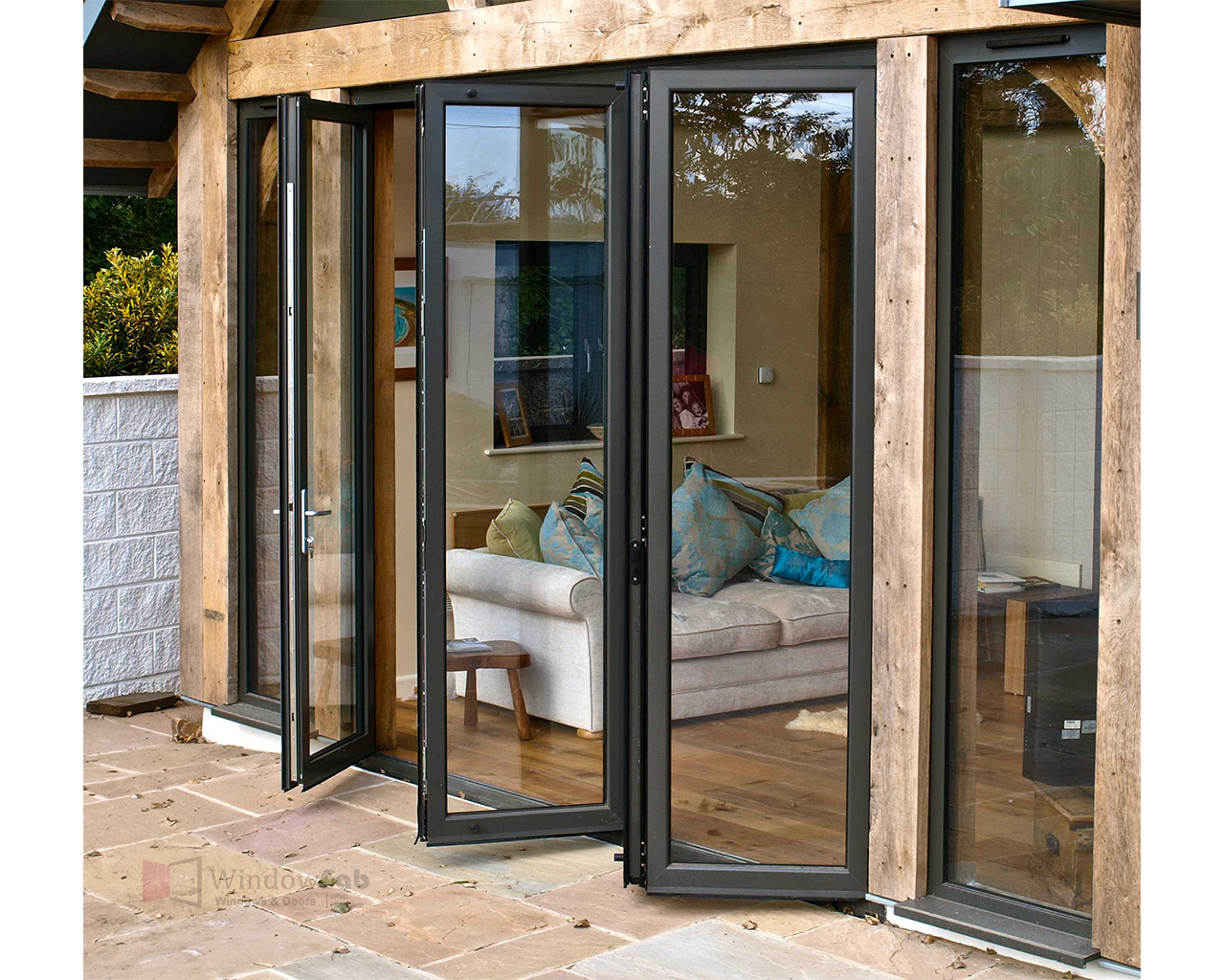
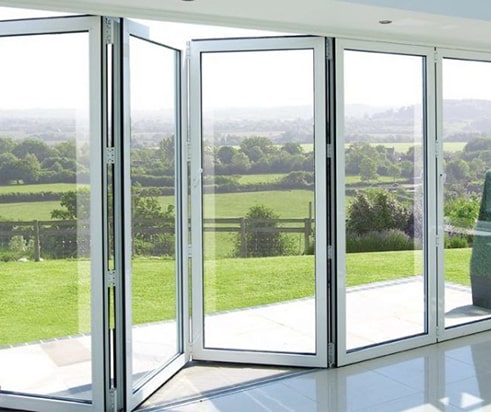
| Slide & Fold | Multi-panel design with premium hardware and large glass areas. Best for wide uninterrupted openings. | View Details → |
| Villa / French | Designed for larger spans, enhanced insulation and premium aesthetics in independent homes. | View Details → |
| Combination | Custom mix of sliding, fixed and casement panels. Pricing depends on the final configuration. | View Details → |

uPVC windows cost per sq ft — useful, but incomplete
Per-square-foot pricing is the most common way uPVC windows are quoted, and it is a useful starting point for budgeting. But it is an average, not a specification — and on its own it can be
misleading.
Two windows of exactly the same size can carry very different prices, because the rate per square foot hides what is inside it: the profile depth and chamber design, the glass (single, toughened, laminated, DGU or Low-E), the hardware grade, whether mesh and grills are included, and the quality of installation. A low per-sq-ft number often means a thinner profile, lighter reinforcement, basic glass or budget hardware — savings you do not see until the window is in the wall.
So use cost per sq ft to set a rough budget, then compare quotes on specification, not on the headline rate. The most reliable number is the one produced after your openings are measured and the right system is specified for each room.
uPVC windows price in Kerala and across India
Location affects the final cost of a window project. Transport to site, installation access, floor level, site conditions and project scale all feed into the price — which is one more reason a national ‘average rate’ can only ever be a guide.
In Kerala, the climate also shapes the right specification. High humidity, heavy monsoon rain, coastal salt air and intense UV systematically degrade wood and corrode aluminium over time. uPVC is chemically inert to all of these — it does not absorb moisture, oxidise or change
dimensionally under thermal load. For homes in Kochi, Thrissur, Kozhikode and other coastal or high-humidity zones, that durability is precisely what justifies specifying a properly engineered
system rather than the cheapest available frame. Ascendia’s Renolit UV-stable surface is rated for long-term colour and structural stability in exactly these conditions.
Because the correct specification varies with exposure — a sea-facing high-rise needs a different build to a ground-floor inland bedroom — Kerala pricing is best resolved by a site survey, not a flat rate.
uPVC vs aluminium windows: cost and long-term value
| Feature | Ascendia uPVC | Aluminium | Wooden |
|---|---|---|---|
| Thermal Proofing | ✅ Excellent | ❌ Poor | ⚠️ Moderate |
| Soundproofing | ✅ Strong | ⚠️ Average | ⚠️ Moderate |
| Maintenance | ✅ Zero | ⚠️ Medium | ❌ High |
| Weather Resistance | ✅ Excellent in rain & humidity | ⚠️ Good | ❌ Weak |
| Lifespan | ✅ 25–40 Years | ⚠️ 20–30 Years | ❌ 5–10 Years |
| Corrosion | ✅ No Corrosion | ❌ Corrodes Near Coast | ❌ Can Rot |
Cheap uPVC windows vs an engineered uPVC system

How to compare uPVC window quotations
- Is the window type clearly stated for each opening?
- Are exact measurements specified?
- Is the profile / system specification given (e.g. profile depth, reinforcement)?
- Is the glass specification stated (single, toughened, laminated, DGU, Low-E)?
- Is the hardware specified (make and type)?
- Are mesh and grills included or quoted separately?
- Is installation included?
- Are transport and any site charges included?
- Is warranty and after-sales support stated?
- Are exclusions clearly listed?
How to get an accurate uPVC window estimate
- Project location
- Number of windows
- Approximate sizes of the openings
- Window type preference (or let the survey recommend)
- New construction or replacement / renovation
- Floor level and access
- Mesh and grill requirement
- Any glass preference (noise, heat or safety priority)
- Photos or drawings, if available
- Your timeline
Ready for a Project-Specific Quote?
Share your requirements and our team will arrange a free site visit.
Share Your Requirements Book a Free Site VisitWhy consider Ascendia for uPVC windows?
Ascendia is not a hardware brand or a profile seller. It engineers complete, German-powered
uPVC window systems — built and calibrated as one assembly so that performance is an
outcome of the whole system, not a single feature. For a price-led decision, that matters: it is
what stands behind the number on the quote.
What the price reflects at Ascendia:
- German hardware integration — Siegenia and G-U (Gretsch-Unitas) for smooth operation and secure, durable locking.
- European-standard multi-chamber profiles in 50 mm and 62 mm depths, with ISO-tested GI steel reinforcement (1–1.5 mm).
- EPDM double-gasket sealing and a full glazing range — toughened, laminated, DGU and reflective / Low-E.
- Renolit UV-stable surface technology for long-term colour stability in coastal and high-humidity conditions.
- A defined five-stage process: site survey → system design & quotation → CNC fabrication → on-site installation & calibration → quality inspection & warranty handover.
- A 10-year complete system warranty and a 20-year weathering warranty on select surface technologies.
- 24 engineered models across 12 premium series, for residential and commercial projects — chosen by architects, villa owners and design-build contractors.
FAQs
What is the price of uPVC windows?
What is the cost of uPVC windows in India?
What is the uPVC window price per sq ft?
Why does uPVC window price vary?
Are uPVC windows expensive?
Are uPVC windows cheaper than aluminium?
What affects uPVC windows cost the most?
Is installation included in the uPVC window price?
Does glass affect uPVC window cost?
Does hardware affect uPVC window price?
Which uPVC window type is most affordable?
How do I compare uPVC window quotations?
Can I get an exact price without a site measurement?
What details are needed for a uPVC window estimate?
Why should I consider Ascendia for uPVC windows?
The right way to think about
uPVC windows price
uPVC windows price is never one number — it depends on window type, size, glass, hardware, installation, design and the specific conditions of your project. Per-square-foot rates are a useful starting point, but they hide what is inside the price, and the cheapest quote is rarely the best long-term value. The smarter approach is to compare quotes on specification, weigh price against decades of performance, and choose a complete, correctly engineered system over a frame with the savings hidden inside it.
Ascendia engineers premium, German-powered uPVC window systems for exactly that decision — built, calibrated and installed to perform through Kerala’s monsoon, coast and heat for decades. The best next step is a project-specific quotation based on your actual openings.